
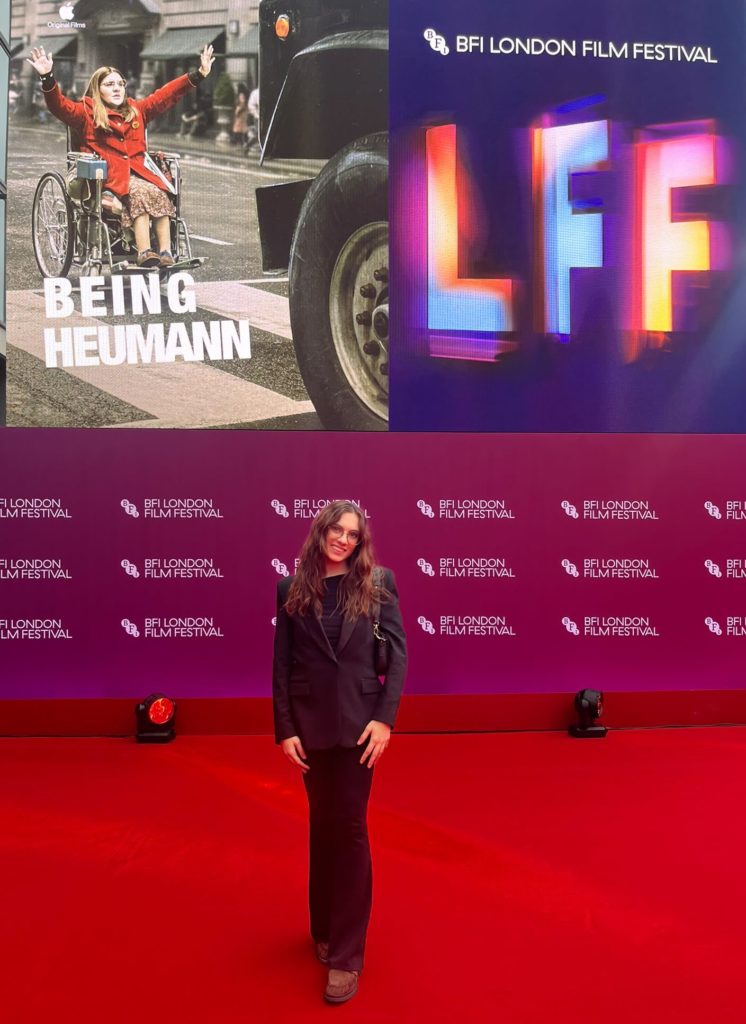
Our Digital Marketing and Communications Officer Arijana was lucky enough to recently attend the London Film Festival Gala screening of Being Heumann, a film about Judy Heumann, a disability rights activist widely known as “The mother of the Disability Rights Movement”. As a Challengers employee with a lived experience of disability, Arijana shares her reflections on the film, Judy Heumann’s story, and how it parallels the struggles disabled children and their families face every day.
Attending the London Film Festival Gala screening of Siân Heder’s Being Heumann was a powerful reminder of the change one person can make in the world, even more so when surrounded by the right community. Yet sadly, it also reminded me how much work there is still to do.
The film brings to life the story of Judy Heumann, a disability rights activist from San Francisco who was perhaps one of the most influential figures in the fight for inclusion from 1970s all the way until her death in 2023. Sian Heder’s Being Heumann is a wonderful adaptation of Judy’s written memoir, authentically paying homage to her life as a disabled woman and advocate, and serving as a testament to Judy’s refusal to accept the status quo.
As a Challengers employee, I left the theatre screening reflecting about the connection between Judy’s fight for accessibility and the experiences of the disabled children and families that we support continue to face every day. For us at Challengers it is clear; while the world has undoubtedly come a long way since the 1970s portrayal of disability struggles, the fight for inclusion is far from over.
The woman who refused to be excluded
In the film we learn that Judy became a wheelchair user after contracting polio as a child. As a result, she continuously faced exclusion, preventing her from accessing opportunities many of us take for granted. Once rejected from school based on the fact she was considered a ‘fire hazard’, she later had to fight to become a teacher.
In 1977, she organised and led a historic 26-day non-violent occupation of the Health, Education and Welfare office in San Francisco, forcing the government to enact Section 504 of the US 1973 Rehabilitation Act. The 504 Section banned discrimination against disabled people in government funded programmes. Once passed and implemented, these protections paved the way for the Americans with Disabilities Act (ADA), which was signed into law in 1990.
Judy’s influence resonated far beyond the US, contributing to a Disability Pride Month movement, celebrated every July in both the US and UK. The movement challenged the attitudes around disability leading to the recognition of disabled people’s achievements and ongoing fight for inclusion.
Judy Heumann challenged outdated systems and beliefs and demanded change. Because inclusion at its core is all about ensuring everyone has the opportunity to participate and thrive: something we at Challengers know very well.
Exclusion starts earlier than we think
Although often discussed through a lens of legislation and employment, disability rights should be considered much earlier. Inclusion starts in childhood, with the opportunity to play.
In 2026, too many disabled children are still missing out on everyday play and social experiences due to inaccessible playgrounds or clubs unable to meet their needs. In fact, in the most recent Parent Carer survey more than half of Challengers families reported that their disabled child has experienced exclusion from other settings. These barriers mean fewer opportunities to socialise and a growing sense of isolation.
But it impacts more than just the child. For our families, it can mean constantly fighting for their child’s basic rights and being met with disappointment once realising that support is sadly unavailable.
Turning inclusion into reality
At Challengers, we know that every child deserves to play, have fun and feel like they belong. Our approach is rooted in the Social Model of Disability, recognising that people are disabled not by the complexity of their needs but by the physical and social barriers in society. We don’t ask whether a child can join in with our existing activities but instead ask ourselves what we can do to adapt the activity and make it accessible and enjoyable for the child.
But inclusion doesn’t stop with the individual. During the Gala, there was one moment which stood out to me more than any other. The director Siân Heder and lead actors Ruth Madeley and Rob Delaney came out to give a speech. As Madeley, a wheelchair user herself, was speaking all the audience could hear were persistent cheers. Smiling, she confirmed it was her proud father who could be heard encouraging her on from his seat somewhere in crowd. Such a simple yet moving gesture, reminding us of yet another story often overlooked – families standing alongside their disabled children, supporting them, advocating for them and celebrating them for who they are.
Behind so many disabled children are parents who spend enormous amounts of time navigating systems, fighting for support, attending appointments, and adapting family life to make sure their child has every opportunity to thrive. But this can be exhausting, especially when you don’t have a support system or understanding community around you.
Through accessing Challengers services, disabled children can develop friendships, confidence and discover new interests, allowing their families some much needed respite and the chance to connect with other people who get it. Because inclusion means supporting families, not only children.
The fight continues
Accessibility in a physical sense is important, but inclusion often means much more: specialist trained staff, adequate funding, flexible services and the willingness to challenge ideas about what disabled children can or cannot achieve.
It also means recognising the pressures parent carers face, fighting daily for their children to receive appropriate support. Charities however cannot remove every barrier alone. We need everyone to recognise that inclusion is not an add-on, but an essential part of a fair society.
From 1970s protest to the freedom to play
Judy’s story reminds us that progress happens once people challenge exclusion. The 504 Sit-in protest helped pave the way for genuine progress, including global recognition.
At Challengers, our work takes is somewhat different, but the principle remains – disabled children should not have to fight to participate fully in everyday life. Because the fight for disability rights does not end when a law is passed. It continues wherever a child is still being left out.
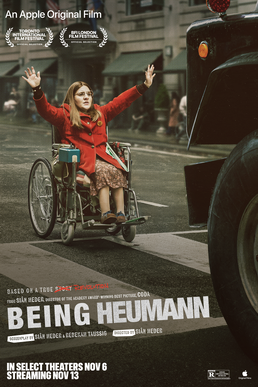
Being Heumann is scheduled to release on 13th November 2026, following a theatrical release on 6th November 2026. If you get the chance, I urge you to watch this amazing drama – I can’t recommend it highly enough!
Finally, our 2025–26 Impact Report shares more stories similar to Judy’s, showing how we’re helping to transform the lives of disabled children and their families. If you haven’t had a chance to read it yet, explore the report below.
Media Notice and Disclaimer: This review was produced by Challengers for non-commercial educational, advocacy, and critical commentary purposes. All copyrighted materials, including promotional posters and studio imagery from Being Heumann, are the sole property of Apple Original Films and their respective creators. Their inclusion here strictly satisfies the criteria for Fair Dealing under Section 30 of the UK Copyright, Designs and Patents Act 1988 (Criticism, Review, and News Reporting).